Isn’t it strange what prompts certain thoughts to go through your mind? After a pretty ordinary day gardening and realising how unfit I was, I sat down to watch the fascinating documentary about the new RHS Garden Bridgewater and how, despite numerous setbacks, including Coronavirus, its staff remained resilient and determined in its unique creation.
Reflecting on their individual and collective journey made me stop and think about my own over the last 15 months. I have for the most part remained positive and have been thankful for all those who have supported me both professionally and personally.
I cannot pretend to understand how incredibly difficult this must have been for our politicians and scientists, but what has become abundantly clear is that it has had an impact on us all. Admittedly in different ways, for some it has been devastating, whilst for others it has caused an unexpected interruption to normal service.
Despite all the good and sustained work carried out by so many people, there will always be those who point the finger and poke the wound and for no one’s benefit but their own.
The choral world will not be beaten, and it will come back stronger than ever before! For all the singers and choral leaders that have tried to understand the science and reasoning behind decisions made, have kept going because they are resilient! In a week where we have witnessed Government guidance in Wales telling us that “tenors are more likely to emit more virus than altos and sopranos!” Need I say anymore? But because we reflect and because we are determined to get our choirs singing again we refer to research carried out in 2020 which in commentary references previous research undertaken in 1968.
Further commentary on the 2020 research “suggests there is no specific excess risk of transmission due to singing” (Beale). (Tang) counters this by saying “the study was performed on individual singers one at a time – when the particle profile was found to be similar to talking. Again, this is not necessarily the main problem. The risk is amplified when a group of singers are singing together, e.g. singing to an audience, whether in churches or concert halls or theatres”.
Again, because we are reasonable and professional, we understand these opposing arguments and as recommended we undertook rigorous risk assessments, put in place significant mitigations, developed health declarations, gathered data on our members vaccination status and much more.
Yet, still the argument put forward by the DCMS to restrict indoor singing to 6 (amateurs only of course, because the virus can distinguish between amateur singers and professionals) came about as a recommendation from Public Health England. That still isn’t the point though is it! The amateurs are resilient and will abide by the guidelines because they want to keep everyone safe, and they refer again to the August 2020 research and its limitations.
But then of course we all become aware of the contradictions to all this – large groups of fans at sporting events! No, that’s ok because it is outdoors, and they have all been tested! Oh, but what about those travelling to the event, singing in a confined space and without wearing masks? Or those in the pub or bar cheering on their team – this is the very thing that Dr Tang is saying, it is the cumulative impact! Of course, it is! But again, the virus knows the difference between sports singing and choir singing!
I forgot to mention that Public Health England say they were “not involved in determining policy such as the ‘rule of six’ for people meeting indoors”.
Back to the tenor argument for a minute – most choirs would love to have an army of tenors to counter the row upon row of sopranos and altos, at least to match the volume of sound, never mind emitting the virus. But wait a minute, it seems the tenor argument was a joke all along and some unwitting writer of guidance picked it up and thought it would be good evidence to further restrict choirs. Only in Wales might I add! Wait, stop press – the guidance has been taken down!
But what about Scotland? 2400 fans sang from start to finish at the recent match at Wembley, but that was in England, where church congregations can’t sing. Wait, stop press again – congregations can now sing masked in Wales. But my group of 6 singers, who are sanitised, 2m apart, masked and singing sotto voce for a reduced period of time and doubly vaccinated, couldn’t wait to go to the pub after rehearsal to sit together, unmasked and join in the football celebrations. But there was a problem though, one of the two tenors in attendance out of the 6 was Welsh so he had to be placed on a table of his own! The landlord didn’t want to risk a fine.
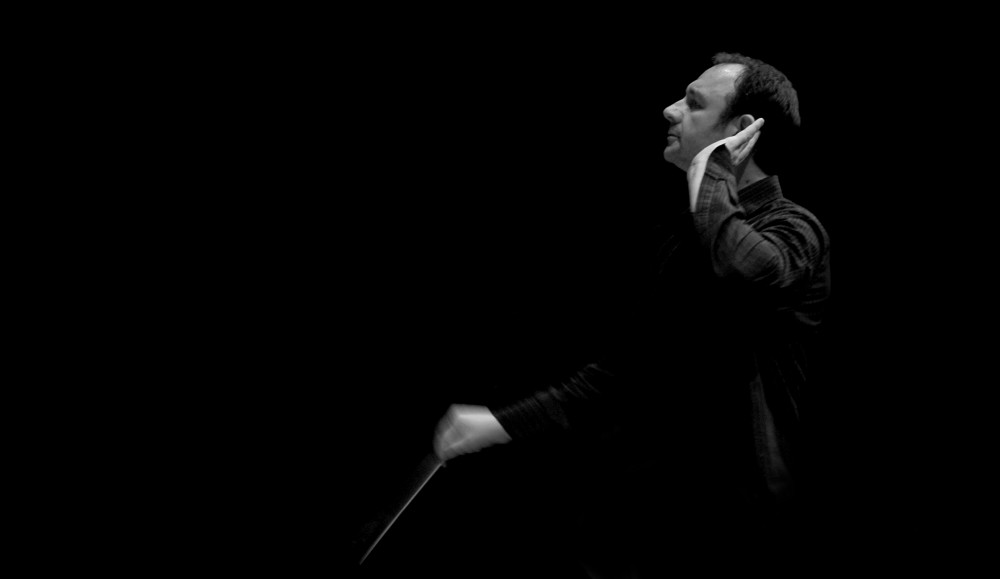
At the start of all this I was a conductor of choirs, but I am so much more than that now and so are our choir committees, who have been resilient in finding a way through the fog!
But “Singing, shouting and physical activity increase the risk of transmission through small droplets and aerosols”.
So, why is anyone singing? Why is anyone shouting? Why is anyone undertaking physical activity?
Well, professionals can sing! 50% of a venues capacity is allowed and sports facilities are open!
Wembley was quite restrained, out of a 90,000 capacity they only allowed 25,000 so they were being careful! Meanwhile, I am still worried about the tenor situation – does that apply to lady tenors? Let alone the tenors in a ladies barbershop choir!
Enough of all of this, I think my point is that we have all become quite resilient, because we have needed to be and because we want to sing.
Anyway, I’m off to book my ticket for the 149th Open who will welcome 32,000 fans on each Championship day and if that was enough I am off to the theatre on 3rd July – I’m going to watch a musical – with singing! But I still don’t understand how this can happen – “The risk is amplified when a group of singers are singing together, e.g. singing to an audience”
Oh no, I’ve just realised I am also a tenor! Have a good week!
 Steven Roberts Blog